Will Oil Shocks and the EV Surge Change Energy Hiring?
 Paul NolanPosted in about 22 hours
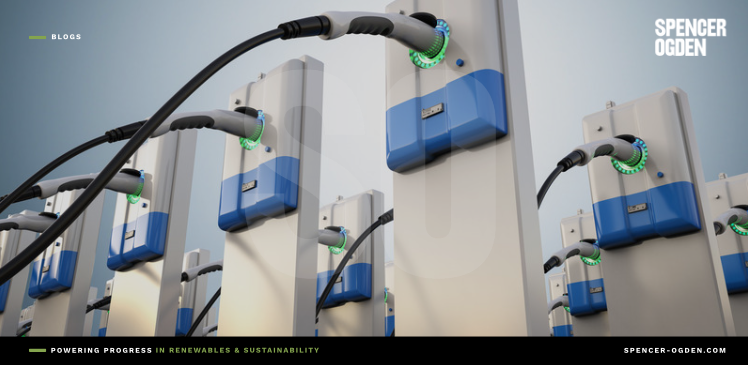
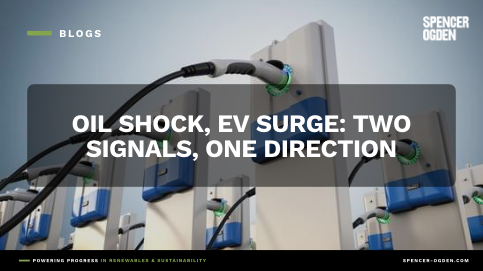
Oil Shock, EV Surge: Two Signals, One Direction
Energy markets sent two connected signals this year. Oil prices jumped on fears about Saudi supply, and EV sales reached record levels in the same period. We asked our LinkedIn audience which of these will define energy hiring by 2030. Of 89 votes, 52% said all areas will be in equal demand. The remaining 48% split almost evenly: 18% chose grid and infrastructure, 16% oil and gas security roles and 15% EV and battery supply chain.
What happened to oil prices?
In mid-September, a drone attack shut Saudi Arabia’s East-West pipeline, which the Saudi government attributed to Iraq-based militias. The pipeline carries around 4 million barrels a day to the Red Sea port of Yanbu, roughly 4% of global supply, and lets Saudi Arabia export without passing through the Strait of Hormuz. Brent and WTI both moved above $100 a barrel as markets priced in the supply risk. Saudi Arabia restored flows on 22 September, and Brent fell by more than $2 towards $97. Full capacity is expected to take several weeks to return.
The episode was short, but it showed how exposed supply routes remain.
What is happening with EV sales?
The International Energy Agency reports that global EV sales rebounded 35% in the second quarter compared with the first, reaching record levels in 50 countries. This happened while overall global car sales fell around 5% in the first half. Sales in Australia, Brazil, India, Korea and Vietnam roughly doubled between March and June compared with a year earlier. The IEA now expects EVs to account for 29% of global car sales in 2026, slightly above its previous forecast. It links the acceleration to fuel price volatility tied to the Middle East crisis.
What did our poll say about hiring?
A majority of voters expect demand across the board, not a winner. Among those who picked one area, the split was close to a three-way tie, with grid and infrastructure narrowly ahead. At 89 votes, this is a small sample, but the pattern fits what we see in the market: the transition is overlapping, not switching over.
Energy security keeps oil and gas roles in demand, and EV adoption builds demand for battery and supply chain expertise. Grid and infrastructure sit underneath both, as every electrified vehicle and every resilient energy system depends on the network behind it. That is our view from recruitment, not survey data.
Where does the opportunity sit?
The most valuable talent over the next decade is likely to be the people who can work across both worlds: grid engineers who understand legacy and renewable infrastructure, supply chain specialists who can move between traditional fuels and battery materials, and commercial professionals who understand energy security and electrification together. Employers who plan for that crossover now, rather than treating each side of the transition as a separate hiring market, will be better placed when demand shifts again.
As advisors to employers on both sides of the transition, we help clients map the skills they need today and the ones they will need as the mix changes.
If you are hiring across the energy transition, we would welcome the conversation. Visit spencer-ogden.com to speak to our Natural Resources and Sustainability teams here.
More articles like this
Stay informed with sector news, thought leadership, and market insights from our specialists.