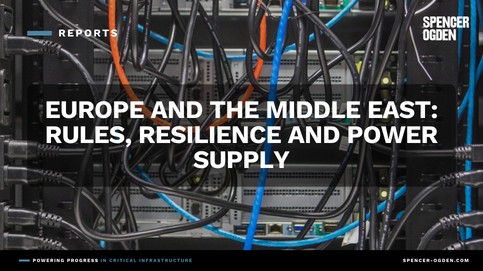
Europe and the Middle East: Rules, Resilience and Power Supply
 Paul KingPosted in 1 day
In EMEA, September's news centred on how Data Centers connect to energy systems, and how they are protected once connected.
The EU moves toward ratings.
On 21 September, the European Commission proposed a common rating scheme for Data Centers above 500kW. Operators would disclose energy and water efficiency, water stress and any services they can offer the local energy system, such as waste heat reuse. The scheme sets no limits and does not require total power disclosure, but the Commission says it could precede mandatory minimum standards. Parliament and Council have two months to scrutinise it, and the first labels are expected in 2027.
Scotland tightens planning.
On 17 August, ministers directed councils to notify them within seven days of any application above 50MW. On 16 September a further direction made Environmental Impact Assessments mandatory above 50MW. Smaller sites remain case by case.
Ireland tests flexibility.
The regulator has proposed interruptible gas connections for large users. Its analysis found that 17 planned Data Centers would have the peak gas demand of six 500MW gas turbines. Network modelling shows a possible shortfall of up to 18% in a severe 1-in-50 winter. Facilities could reduce load, shift workloads or switch to backup fuel. The regulator has since clarified that it is considering a network tariff discount, not a discounted gas price.
Finland pairs investment with supply.
Google committed at least €13bn (about $15bn) across 2027 and 2028 for Hamina, Kajaani, Muhos and Vaala. A 22-year agreement with Fortum supports the Loviisa nuclear plant's life extension, and a 94MW battery system near Kajaani is due in late 2027.
Resilience is now a design question.
In mid-September, AWS confirmed it cannot restore data hosted exclusively in one of its three UAE availability zones, following physical damage in March. The other two zones are still being recovered. The episode shows why recovery engineering and physical site resilience now sit alongside efficiency in project briefs.
What this means for talent.
Environmental assessment, gas and electricity network engineering, flexible load design, nuclear life extension and resilience engineering are all in demand. We advise clients to map these skills against their approval timelines, and to decide where permanent expertise should sit and where specialist contractors add capacity.
Building in EMEA? Speak to our Critical Infrastructure and Power team at spencerogden.com.
Sources: European Commission via Reuters; Scottish Government; Brodies LLP; Irish Times; Commission for Regulation of Utilities; Data Center Dynamics; Google; AWS status updates via Techzine and InfoQ.
More articles like this
Stay informed with sector news, thought leadership, and market insights from our specialists.