How Should Employers Be Using AI in Hiring?
 Ciera WillisPosted in about 22 hours
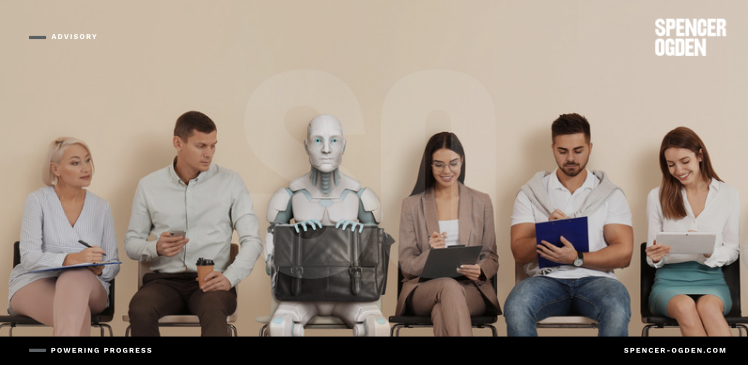
Hiring in the Age of AI: The Importance of a Human Touch
When we asked our network about their biggest hiring challenge, two in three voters (66%) named finding the right talent. Time constraints followed at 17%, with team bandwidth and trust in outside support each at 7%. It is a small poll of 39 votes, but the message matches what our consultants hear every day. Add AI to a market already short of talent and the picture becomes more complex. Employers want the speed and scale AI can offer. They also want to be sure the people they hire are the right people, and that the process behind those hires is fair, lawful and trusted. Our consultants tell the same story. Of nine who responded to our internal survey, seven named talent availability in some form as their main challenge.
What are employers worried about most?
Three concerns come up repeatedly. The first is fairness and compliance. The UK Information Commissioner's Office audited AI recruitment tool providers between August 2023 and May 2024, and its November 2024 report found that some tools lacked regular accuracy testing and could filter out candidates with protected characteristics. The second is authenticity. Gartner research found that 6% of candidates admitted to interview fraud, and Gartner predicts that by 2028 one in four candidate profiles worldwide will be fake. The third is the loss of the human relationship that good hiring depends on.
"Candidate quality, fake CVs, and AI usage in interviews." An SO consultant describing the top concern clients raise.
Authenticity comes up again and again. Kara Keenan, whose team covers Infrastructure, Natural Resources and Sustainability, says clients worry about "losing human touch and losing authenticity in interviews and CVs," and that conversations are increasingly too scripted. Kaylynne Harper, who works in Renewables & Sustainability, says: "Our clients can pick up when candidates use AI and are generally turned away from it."
In Finance, the worry is more technical. A Finance consultant told us clients want to be sure AI is not used during modelling exams, and that some younger candidates rely heavily on it to build models without learning the underlying skills.
Where does AI help, and where does it hurt?
AI helps most where the work is repetitive: scheduling, drafting job adverts, summarising notes and supporting first-pass screening. Used this way, it frees time for the conversations that matter.
It hurts when it is trusted to make decisions it was not built to make. In specialist energy and infrastructure markets, the same skill can carry different names across sectors and regions, and keyword matching can miss strong candidates entirely. The ICO's report stressed the importance of human oversight and of using tools only for the purposes they were designed for.
Can AI solve the talent shortage?
Not on its own. Our poll shows that access to talent is the pressure employers feel most, and our consultants point to niche skillsets, an ageing workforce and small local talent pools as the root causes. AI can search faster and cast a wider net. It cannot create talent that does not exist, and it cannot earn the trust of a skilled professional who is not actively looking. That still takes market knowledge and relationships built over time.
How do we help clients manage AI risk in hiring?
Most clients are not asking us about AI directly. What they ask for, in effect, is assurance that the candidates we put forward are who they say they are. That is where specialist consultants add value.
Our consultants take on the diligence clients rarely have time to do themselves. They check that a candidate's experience matches their CV, take up references, and test how someone discusses their work, not only how they write about it. Many of our placements come from candidates we have known for months or years. As Kaylynne Harper puts it, "Being able to build those relationships and know a candidate so well really helps. That's something AI could never do, and our clients rely on our input when we're sending candidates to a job."
Kara Keenan describes the same value from a different angle. Our consultants assess cultural fit, personality and motivation, validate experience, and identify red flags, "to ensure candidates are not only technically qualified but the right fit for the client, team, and working environment." Candidates feel the difference too. As one consultant puts it, they want to talk to real humans about the jobs.
What should you look for in candidate screenings, and what are the risks of AI usage?
AI has changed what a polished application means. Gartner found that 39% of candidates used AI during the application process, most often for their CV (54%) and cover letter (50%). A well-written CV is no longer proof of capability.
Screening should therefore test depth through conversation, references and live assessment. Gartner also found that 62% of candidates said they were more likely to apply where in-person interviews were required, so verification does not have to cost you candidates. That is why technical roles need live testing. In Finance, clients increasingly want to see candidates build a model in front of them, with AI use clearly defined and agreed in advance.
How can you build trust when it comes to AI in recruitment?
Trust runs in both directions. Gartner found that only 26% of candidates trust AI to evaluate them fairly, and 25% said they trust an employer less when AI is used to evaluate their information. Employers can close that gap by being open about where AI is used, defining what acceptable AI use looks like for applicants, and keeping real human contact in the process. Candidates should feel they have been seen by a person.
What are our clients telling us?
Our poll put finding the right talent first by a wide margin, at 66% of 39 votes. Only 7% named trust in outside support as their biggest challenge, which suggests that employers engaging with this topic want help with access to talent, not reluctant to seek it. Our consultants agree. Seven of the nine who completed our internal survey named talent availability in some form, from niche skillsets and small local talent pools to an ageing workforce and a shrinking supply of experienced field professionals.
On AI, the message is more subtle. Most clients are not raising it directly. Alyssa Griffin, who works in Critical Infrastructure, notes that many clients likely assume some form of automated screening has been part of recruitment for quite some time. In her view, the bigger pressure is the shrinking supply of experienced field professionals, with a large share of the talent pool approaching retirement while demand for their experience keeps rising. Where concerns surface, they centre on authenticity: AI-written CVs, scripted interviews, and uncertainty about who is really on the other side of the call. The answer our consultants keep returning to is the same. Technology can speed up the process, but trust is built by people who know the market and know the candidate.
How can employers integrate AI successfully?
- Define the purpose. Decide which tasks AI supports and which stay with people.
- Audit your tools. The ICO published key questions to ask before procuring AI for recruitment. They are a practical place to start.
- Keep humans in the decisions that shape someone's career.
- Train your hiring teams to question AI outputs.
- Work with specialists who combine sector expertise with sensible use of technology.
If you would like to talk through your hiring approach, book a call with our team here.
More articles like this
Stay informed with sector news, thought leadership, and market insights from our specialists.